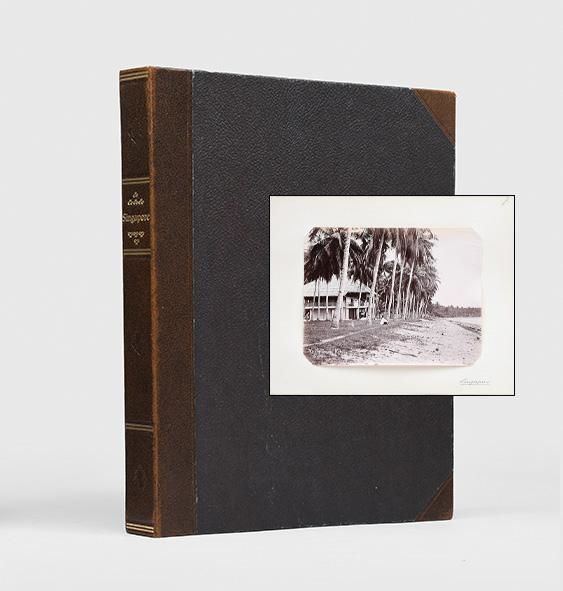
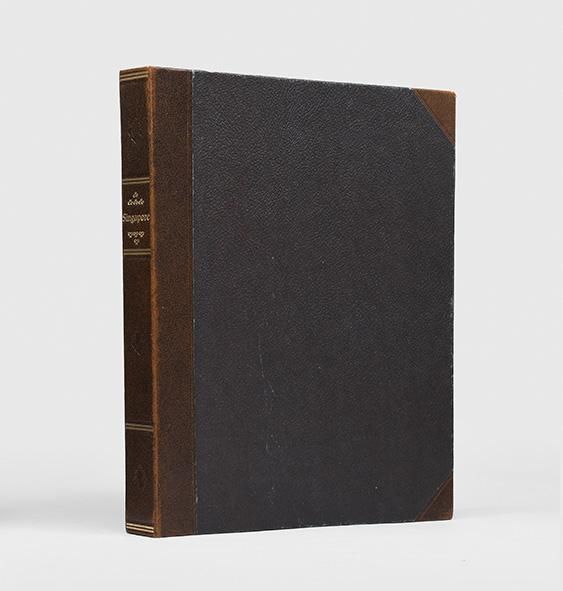
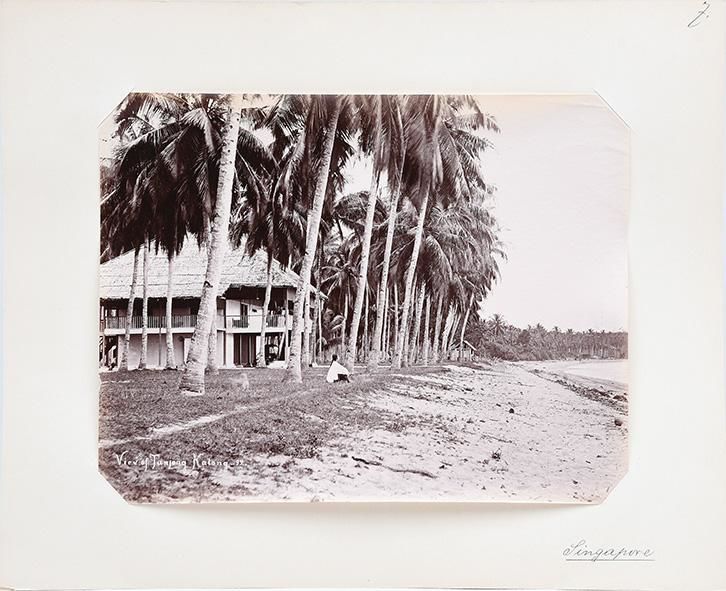
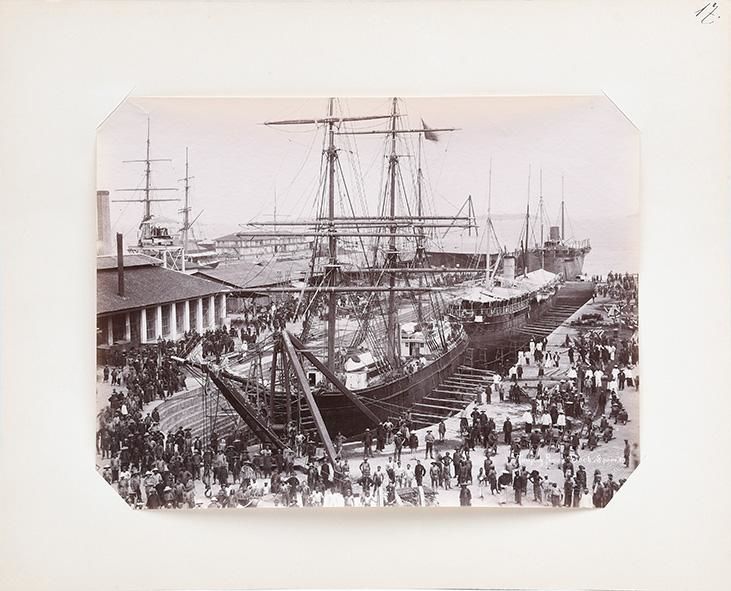
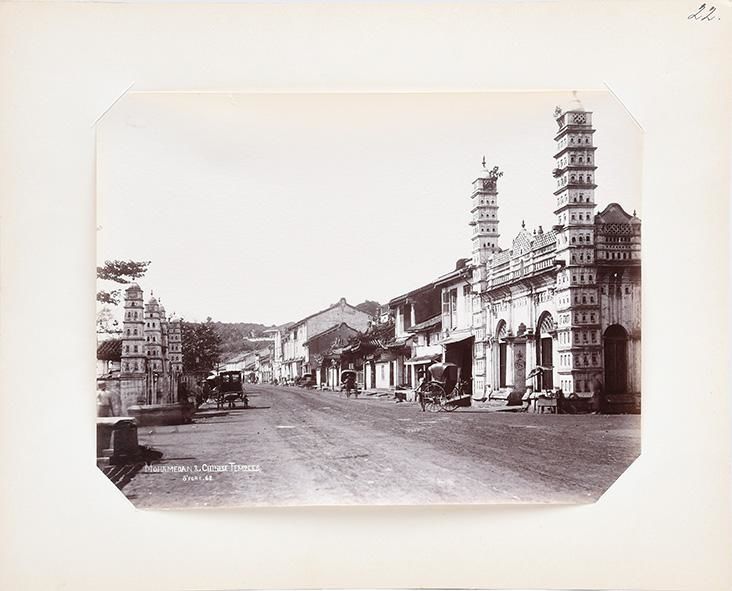
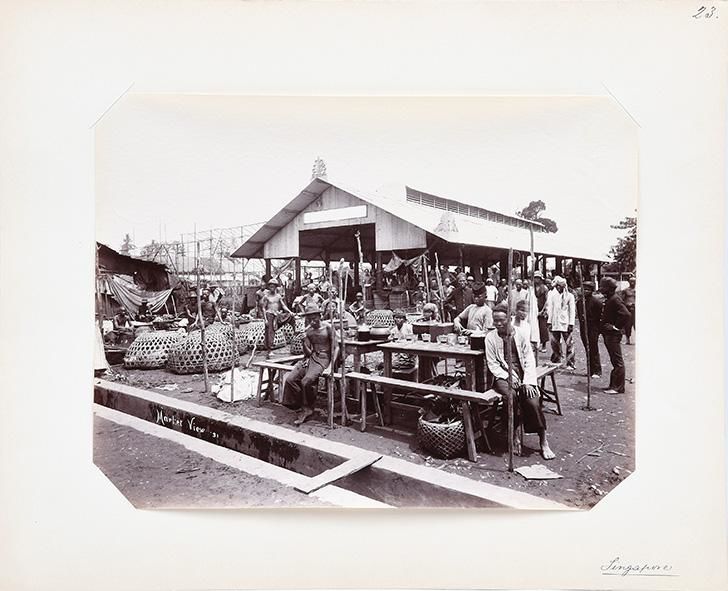
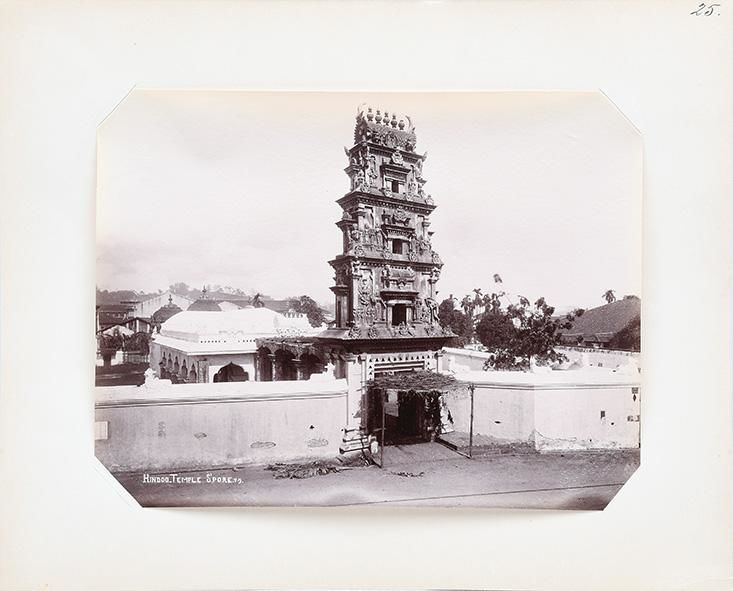
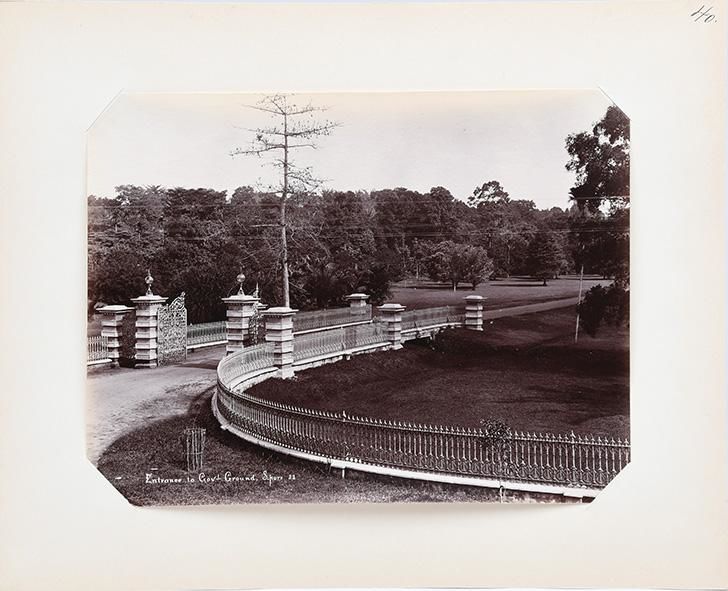
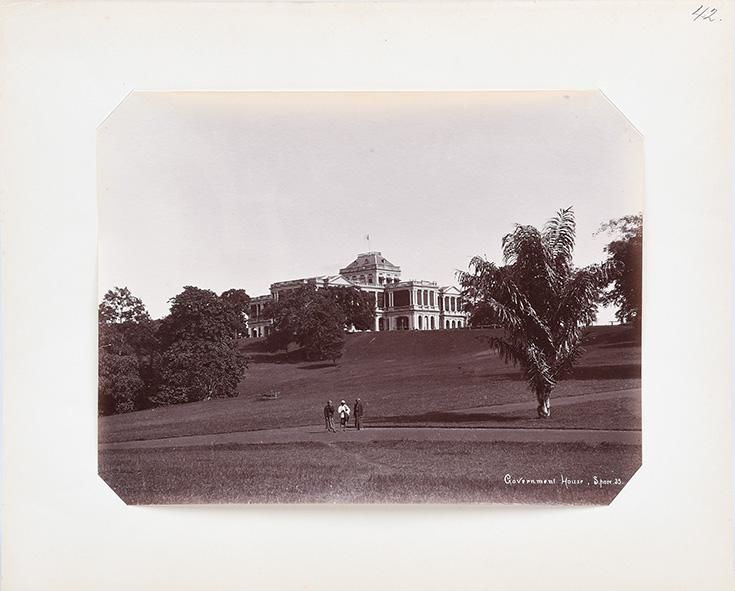
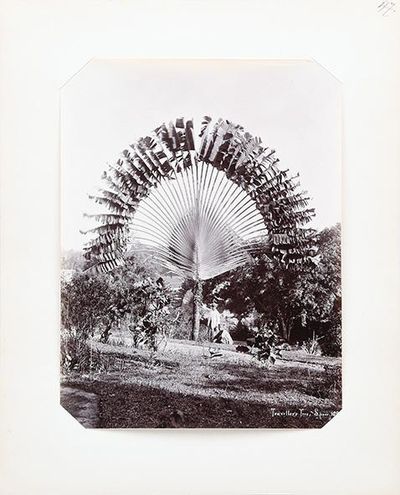
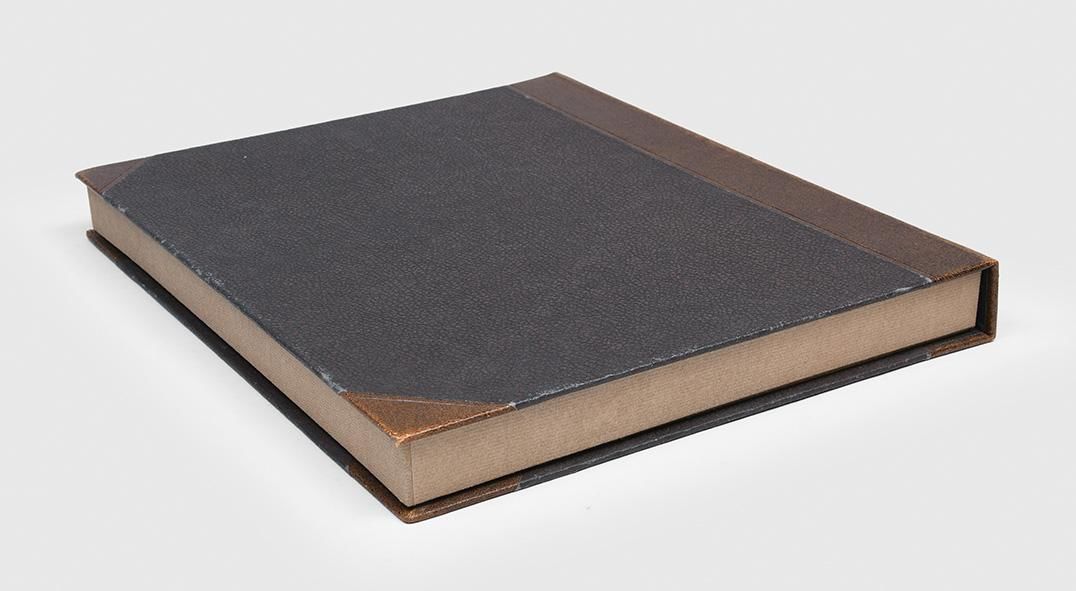
Singapore: G. R. Lambert & Co.,, [c.1890s]. An era of buoyant expansion A portfolio chronicling the blend of the old and the new in late 19th-century Singapore. The dominant photographic force in the region for four decades, G. R. Lambert & Co. are considered the "creators of the lasting image of nineteenth-century Singapore" (Bautze). Gustave Lambert (1846-1907) opened his studio at 1 High Street, Singapore, in 1867, and became the market leader after the closure of Sachtler & Co. in 1874. Business success allowed him to move into new premises on Orchard Road in 1877. In 1890, Lambert sold his name and plates to Georg Koch, a former assistant; by this point in time, he had taken over 3,000 photographs of Singapore, Borneo, Malaya, Siam, and China, including as the official photographer to the King of Siam and the Sultan of Johor. In the 1880s and 1890s, Lambert & Co. expanded its catalogue and added new studios in Delhi, Sumatra, Kuala Lumpur, and Bangkok, and it dominated until the First World War. "A typical print produced by Lambert possessed the picturesque qualities needed to make it saleable in the 19th century. These meant producing sweeping panoramic landscape and architectural views of the burgeoning city" ("Establishment"). Of the 58 photographs here, all but 2 are landscape and 51 are captioned or numbered in the negative - a feature introduced after 1890. Views of Malay villages, including one from St James Square, contrast with the modernity of the colonial settlement, epitomized in the neo-classical Government House and the sweeping railings of its driveway, as well as in views from the back of Police Court, of the High Street from Fort Canning, and of the cricket pavilion, where westerners throng and a marching band plays. Other photos show the police station on Orchard Road, the Teutonic Club, the technologically advanced waterworks and promenade, and the ladies' tennis court. Cavenagh Bridge, Johnston's Pier, ships in dry dock at Tanjong Pagar Dock, and the modern interior of the palace of the Sultan of Johor are other subjects for the Lambert lens. A photograph of Kampong Saigun juxtaposes the curved-roof houses of locals with the large, gabled warehouse of Howarth, Lyon & Erskine, an engineering firm which stayed in business until 1878. A large Chinese house, with an ornate facade, serves as a foil to the western architecture, offering a differing vision of large-scale, modern design. Although the portfolio centres landscapes rather than people, one print captures, from a distance, a solitary resident lost in thought and looking out onto the Singapore Strait at Tanjong Katong. In another, residents of a street look at the camera in a posed shot. A group of Malay women engage in handicrafts, and an all-male gamelan orchestra, supported by a violin, strike a stern pose. In other photographs, we see masked dancers, a theatre troupe on stage, people at a market, shopkeepers, and farmers with their bullocks and cart on Thomson Road. The final photograph shows locals relaxing by the sea at the foot of Mount Palmer. Visitors to Singapore could see a range of religious structures. A large Chinese temple has ornate dragon designs rising out of every rooftop and is only a few doors down from a mosque, the square minarets of which tower over the surroundings. A photograph captures the Hindu temple with a four-tier gopuram, while the cricket pavilion is bordered by a steepled church. The landscape of the town has three visible church spires. The latter fifth of the portfolio celebrates Singapore's flora and gardens. A westerner in white drinks in the beauty of the palms in the botanical gardens, and two men pose with an expansive Traveller's Tree. Three still lifes show an abundant assortment of regional fruits. Together 58 albumen prints (c.215 x 270 mm), 46 with photographer's blind stamp, 1 with rounded corners, all individually mounted through corner slits on 295 x 365 mm sheets of contemporary card, mounts numbered in contemporary black ink manuscript top right, some captioned at foot. With 98 x 175 mm sheet of contemporary card lettered "Singapore" in contemporary black ink manuscript. Housed in custom brown quarter morocco solander box. One print with small contemporary pencil note ("mangosteen"). Prints generally just a little yellowed at peripheries, lightly creased, a few corners dog-eared, one photograph ("Changjie from Govt. Bungalow") expertly repaired at one corner, another (MS number 37) with old tape repairs at corners, a few closed tears to mounts and adhesive tape repairs on verso: a well-preserved collection, most prints showing strong tonal range. Joachim K. Bautze, "G. R. Lambert & Co.: Creators of the Lasting Image of Nineteenth-Century Singapore", available online; Gretchen Liu, Singapore: A Pictorial History, 1819-2000, 2001; "Establishment of G. R. Lambert & Co.", National Library Board Singapore, available online.