ABA News
India: A Category Unto Itself
By Eshan Kapoor
The winner of the 2026 ABA National Book Collecting Prize introduces his collection, 'India: A Category Unto Itself'. Photos by Jon Baker.
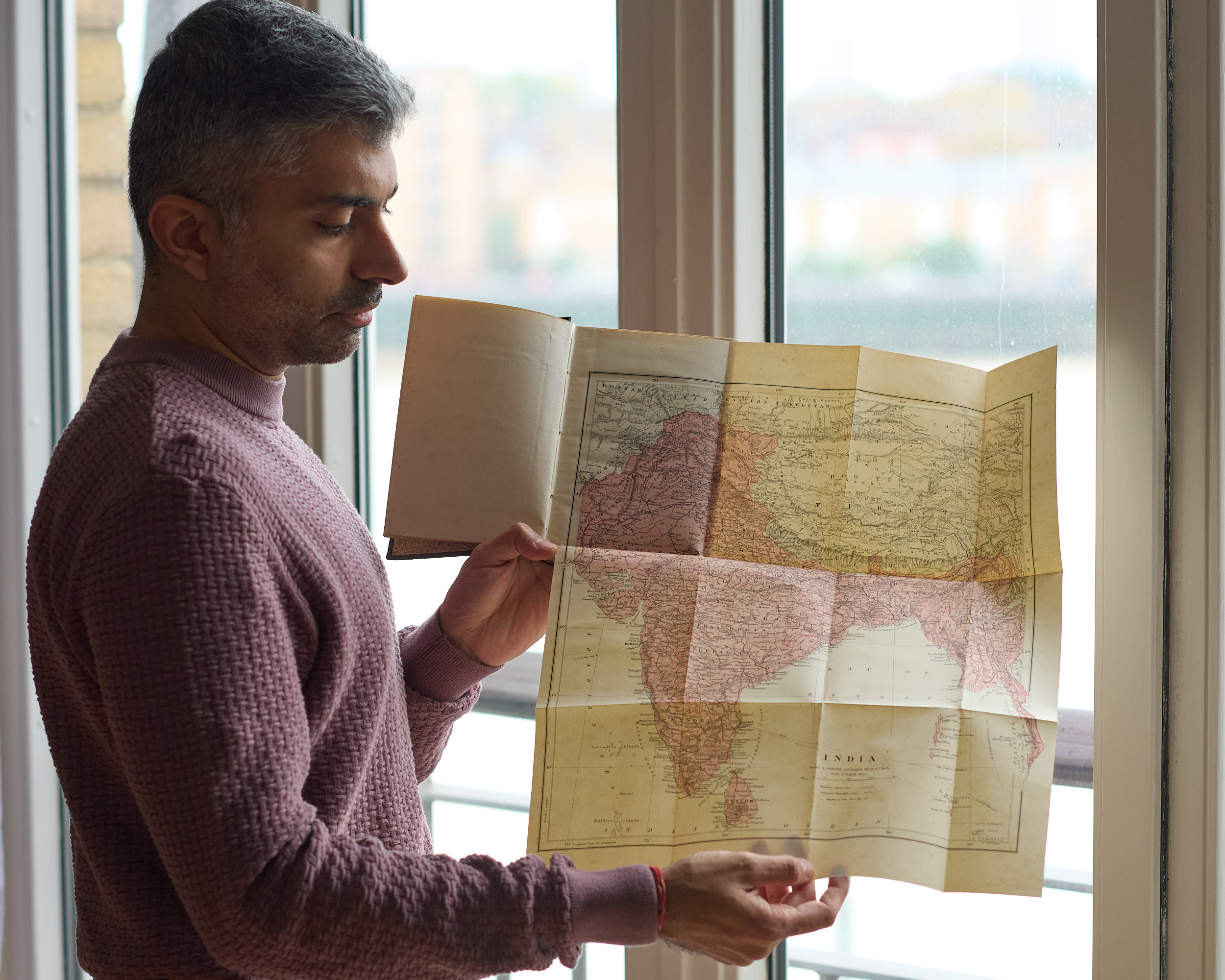
Every great civilisation has its canonical library - the travels of Greece, the chronicles of Rome, the manuscripts of the Islamic world. India, whose written and philosophical traditions are among the oldest on earth, is filed under 'Travel'. My collection began as a correction to that oversight.
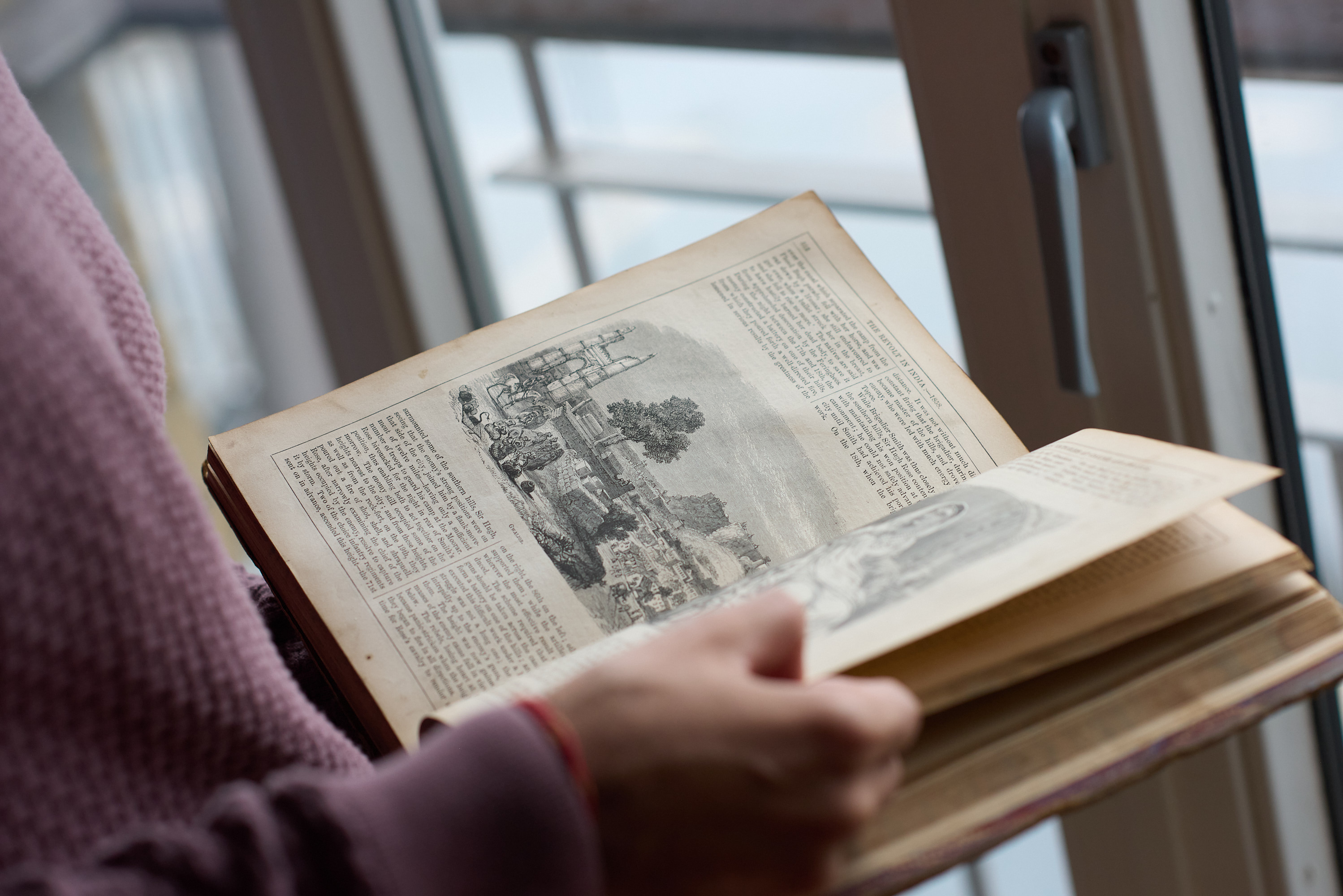
In 2023, newly arrived in London, a book club led me one evening to a rare bookseller in Greenwich. The book placed in my hands was The First Englishmen in India, published in 1930. Holding it, I encountered a voice I had never heard before - not India as commonly imagined, but India as it actually was: wealthy beyond European reckoning, philosophically vast, and capable of astonishing the world. I left the shop a collector.
India has always done this. It has broken people open with its scale. A French gem merchant named Tavernier spent forty years in its courts and diamond mines, and what India put in his hands - a raw 115-carat blue stone from the Golconda mines - eventually became the Hope Diamond. His 1679 Les Six Voyages sits on my shelf. A French astronomer named Le Gentil set out for India in 1760 to observe the transit of Venus; wars and weather defeated him twice over eleven years, and he returned to France to find himself declared dead, his wife remarried, his estate plundered; his account fills my 1780 Voyage dans les Mers de l'Inde. The Abbé Dubois, a missionary who spent years trying to convert Hindus, was so outmatched by Brahmin scholarship and the agency of Hindu women that he wrote, honestly, that conversion was essentially impossible - his 1823 Letters on the State of Christianity in India remains one of the most candid European portraits of Indian intellectual life. These men were not tourists. India exceeded them, and they knew it.
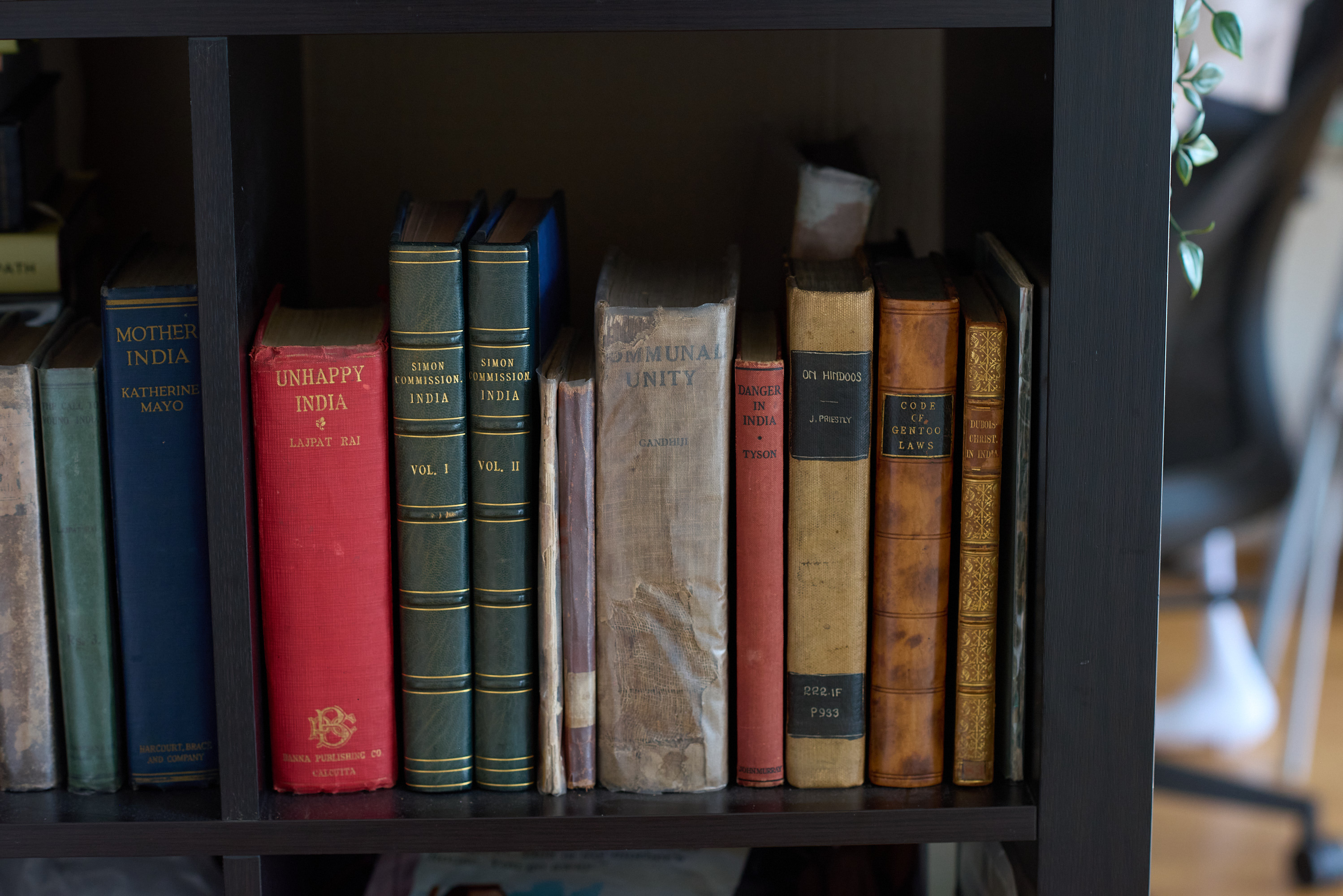
My collection spans nearly four centuries - from a 1631 pocket Elzevir in original vellum, compiled by a director of the Dutch West India Company, to Ambedkar's Thoughts on Pakistan of 1941 - and arrives not only in English but in French, Dutch, Latin, and Greek, because India compelled documentation across the literate world. My contention is that India is not a destination. It is a civilisation that deserves its own shelf, its own taxonomy, its own critical tradition.
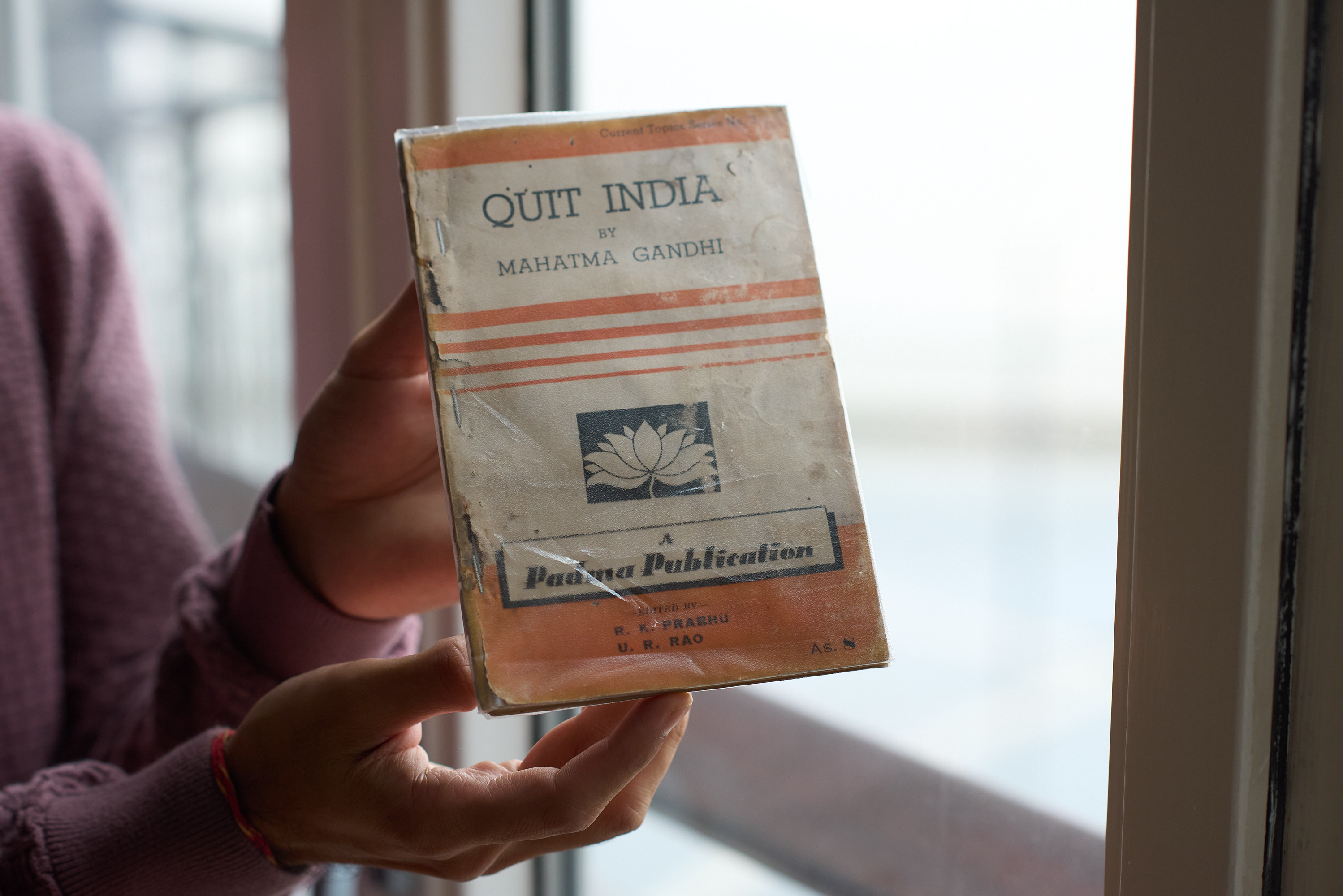
Nowhere is that more apparent than my independence movement shelf, where the books are not documents but acts - and history has arranged them into a chain whose links I only recognised once they were all in my hands. In 1928, Britain sent the all-white Simon Commission to India to decide its constitutional future. Lala Lajpat Rai - the Lion of Punjab, whose works I tracked down through sellers across India, the US, Germany and the UK - led a peaceful protest against the Commission in Lahore. Police beat him. He died three weeks later, declaring that every blow was a nail in the coffin of British imperialism. The following April, the revolutionary Bhagat Singh threw two bombs into the Central Legislative Assembly in Delhi in revenge - injuring Sir George Schuster, the British Finance Member of the Viceroy's Council. On my shelf sits The Monetary Problems of India by L.C. Jain, signed by its author and dedicated to Schuster. In the same collection sits the Simon Commission report itself, inscribed by Vernon Hartshorn - one of the seven commissioners, who sat alongside a then-obscure Labour MP named Clement Attlee, who would, nineteen years later, grant India its independence. Even the language of resistance carries hidden authorship: my copy of Gandhi's Quit India carries an introduction by Yusuf Meherally - who had coined "Simon, Go Back," and who, history records, coined "Quit India" itself. Gandhi only approved the phrase that became his own. Beside Lajpat Rai's Unhappy India - his rebuttal to Katherine Mayo's Mother India, signed by Mayo herself - sits a 1909 first edition of Savarkar's Indian War of Independence, found after a two-year search across the Channel - banned by the British before it was even printed, forcing the next edition underground into the Netherlands, hidden inside dust jackets of The Pickwick Papers, and smuggled into India for decades. The fourth underground edition sits beside the first; I am now hunting the second and third. These books are not filed under Travel. They are a courtroom, a battlefield, a confession, a manifesto. They are what India produced: not a destination, but a civilisation that pulled the world toward it for centuries - and is still not fully reckoned with. India is vast enough to sustain a lifetime of looking.