Roma: Georgius Plachi, 1709. The Great Museum of Athanasius Kircher
One of the Most Important Cabinet of Curiosities Ever Assembled
The Finest and Most Complete Copy We Have Encountered
With an Extraordinary 190 Engraved Plates
[KIRCHER, Athanasius]. BONANNI, Filippo. Musaeum Kircherianum, sive Musaeum a P. Athanasio Kirchero In Collegio Romano Societatis Jesu jam pridem incoeptum Nuper restitutum, auctum, descriptum, & Iconibus illustratum... Rome: Georgius Plachi, 1709.
First edition of Filippo Bonanni's celebrated catalogue of the legendary Kircher Museum in Rome.
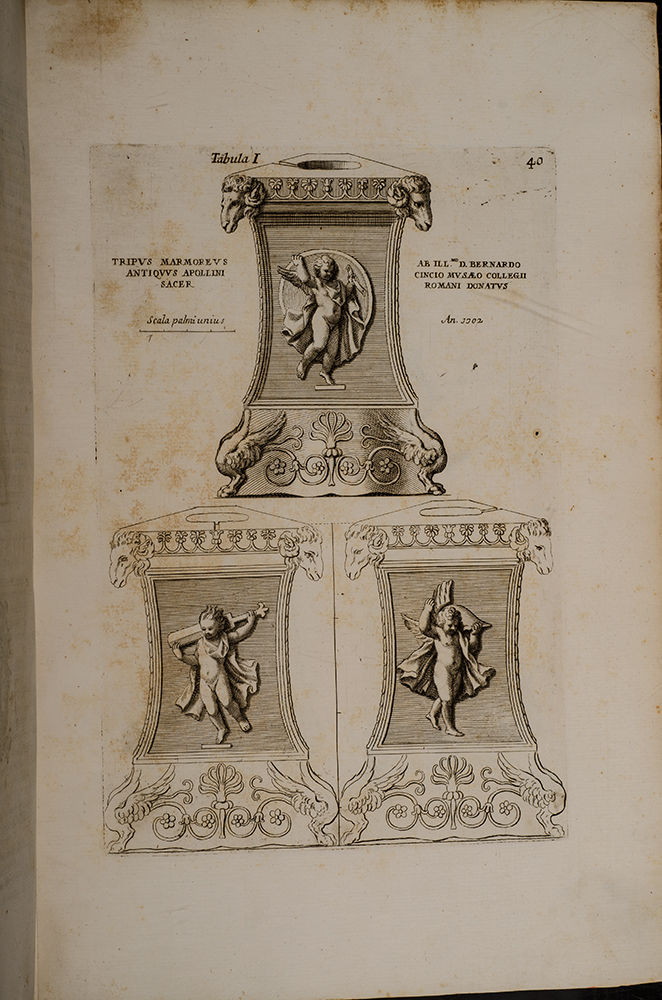
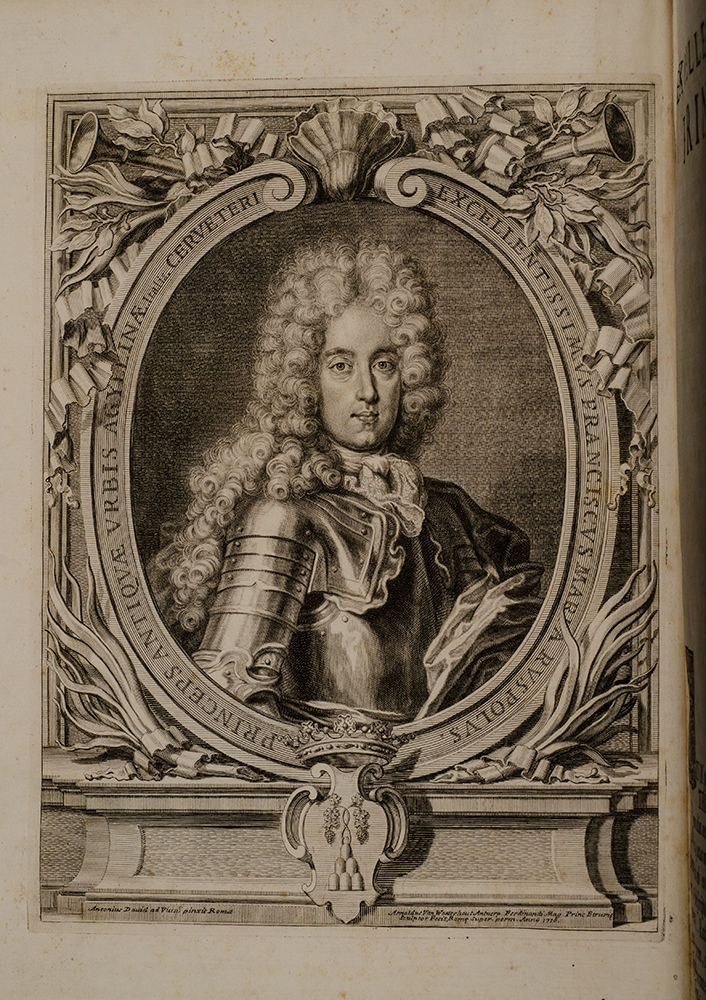
A magnificent and unusually complete copy of one of the greatest museum books of the early Enlightenment, preserving no fewer than 190 engraved plates, including two double-page folding plates-substantially more than are recorded in virtually every bibliographical description and auction catalogue consulted.
Bound in its handsome contemporary vellum, with the attractive Bibliotheca Kircheriana book label and the provenance of the noted French Kircher collector Albert Vialis, this is one of the most desirable copies we have encountered.
Few books better embody the boundless intellectual curiosity of the seventeenth century than the Musaeum Kircherianum. It is the surviving monument to one of history's most celebrated Wunderkammern, the extraordinary cabinet of curiosities assembled over half a century by the remarkable Jesuit polymath Athanasius Kircher (1602-1680). Scholar, linguist, archaeologist, geologist, Egyptologist, physicist, mathematician, music theorist, inventor, collector, and indefatigable correspondent, Kircher sought nothing less than to gather together the entirety of human knowledge. His museum became the physical manifestation of that ambition.
Housed within the Collegio Romano, the museum rapidly became one of the intellectual wonders of Europe. Princes, ambassadors, scholars, clergy, and Grand Tour travelers visited to marvel at its astonishing contents. Unlike earlier princely collections devoted principally to art or antiquities, Kircher's museum embraced virtually every branch of human inquiry. Ancient sculpture stood beside Egyptian mummies, Roman inscriptions beside Chinese antiquities, mechanical clocks beside magnetic instruments, fossils beside exotic shells, scientific apparatus beside ethnographic objects, stuffed animals beside musical instruments, and natural curiosities beside works of art. Every object was intended to reveal another aspect of God's creation and the hidden harmony of the universe.
Following Kircher's death, the museum began gradually to decline until Filippo Bonanni (1638-1725) - himself a distinguished Jesuit scholar, naturalist, conchologist, and one of the pioneers of microscopy - was appointed curator in 1698. Recognizing both the historical importance and the fragility of the collection, Bonanni undertook the enormous task of restoring, enlarging, and documenting the museum. The present volume, published in 1709, is the magnificent result of that undertaking and remains our principal record of one of the most famous collections ever assembled.
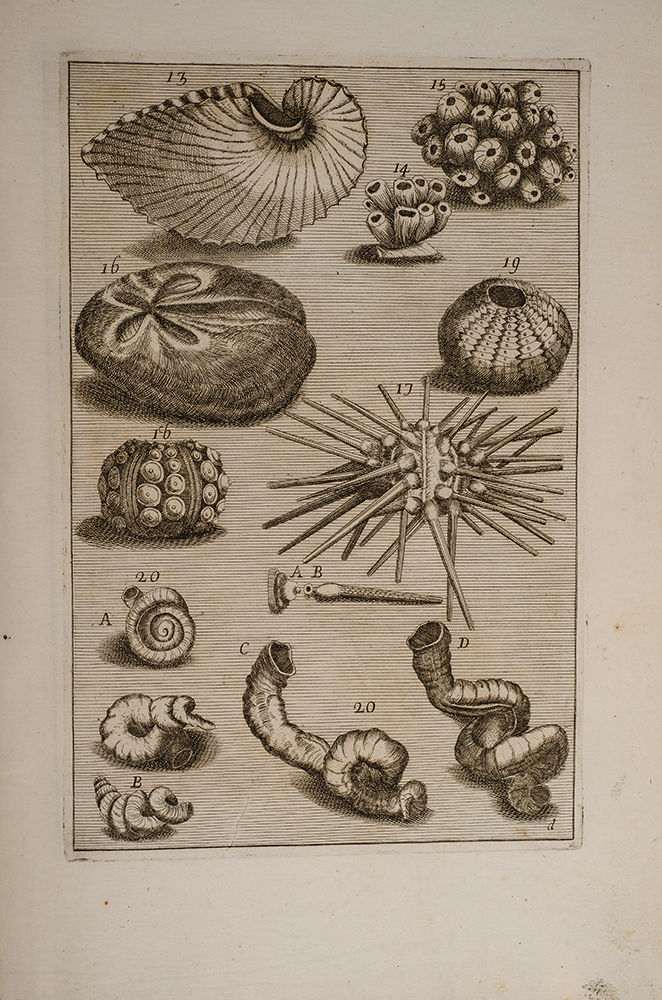
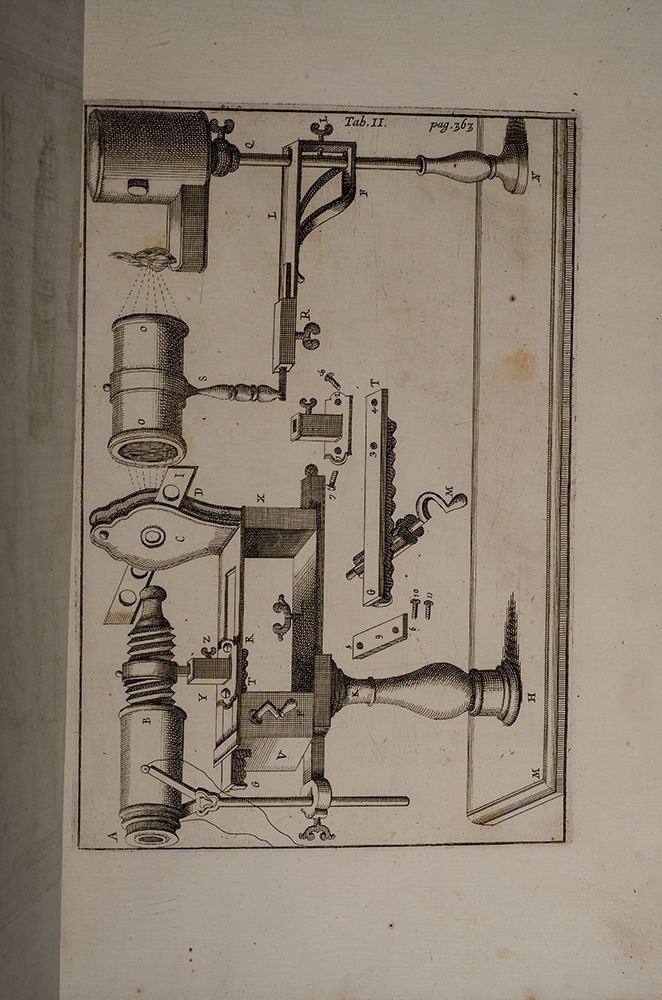
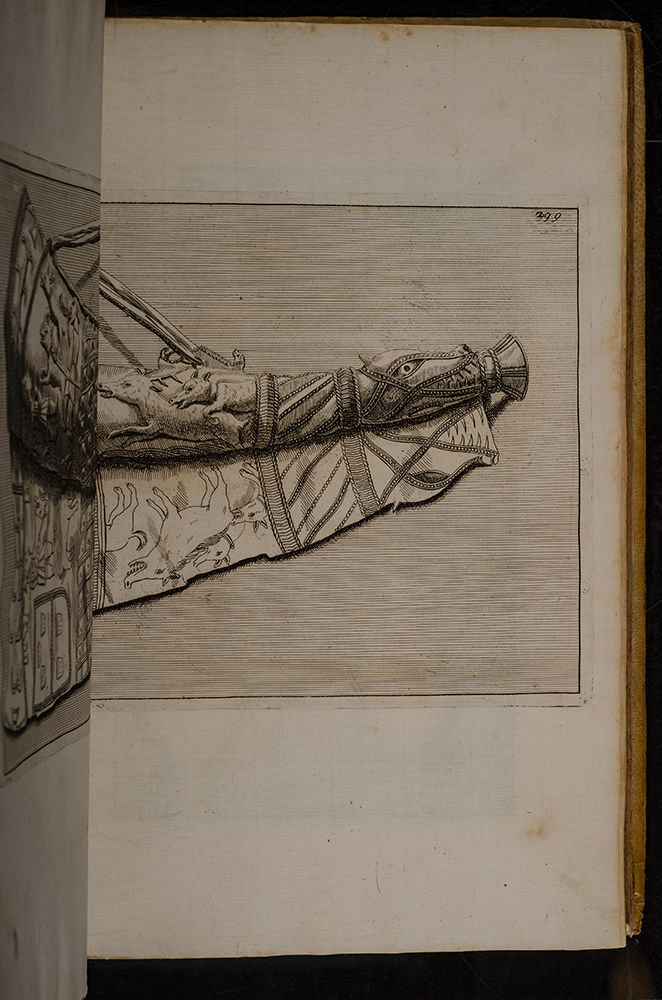
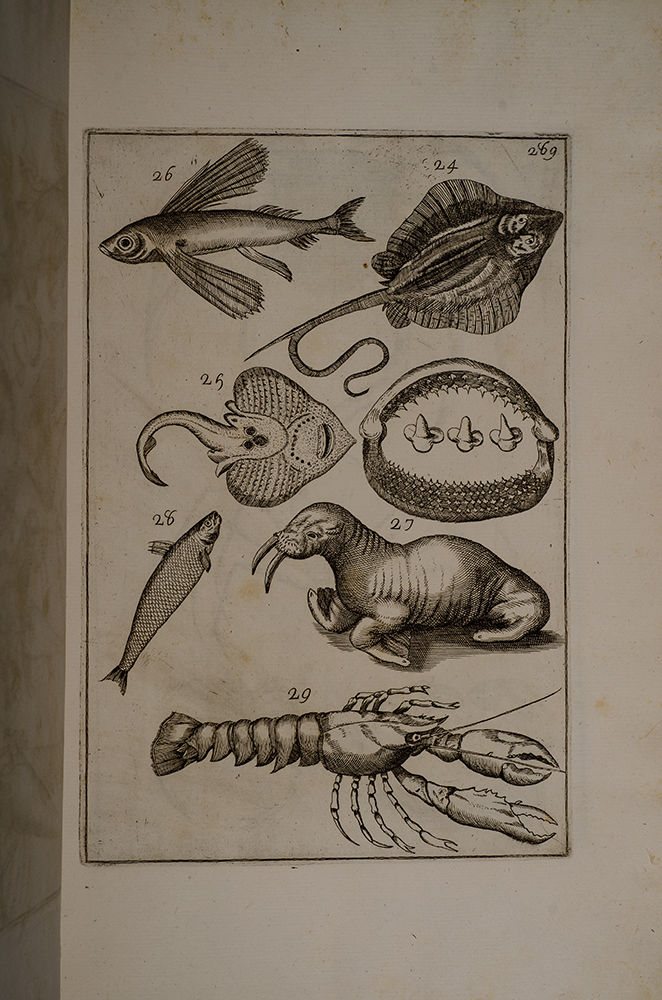
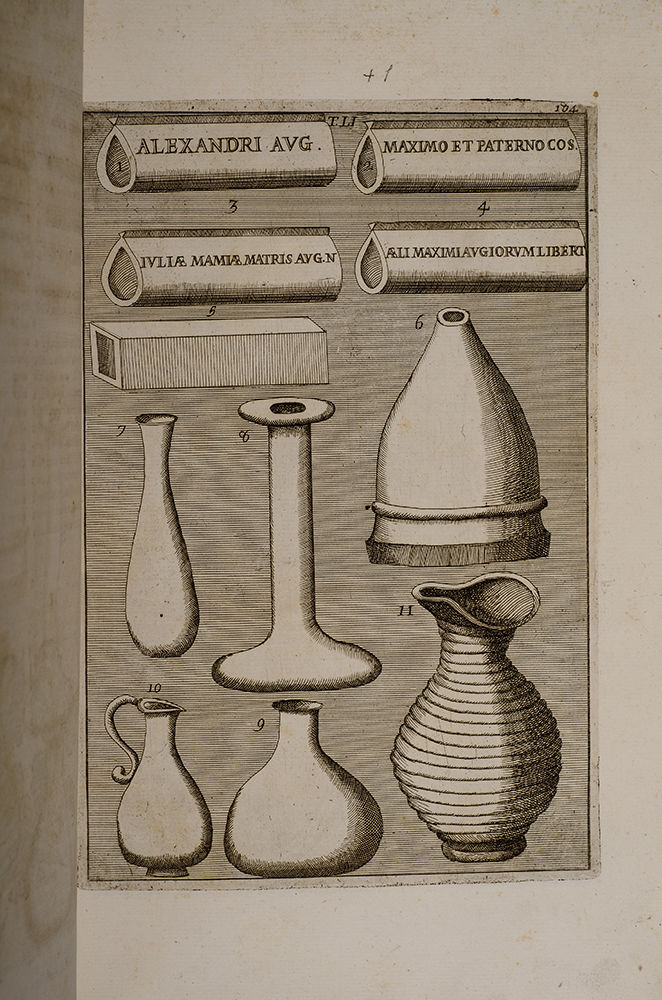
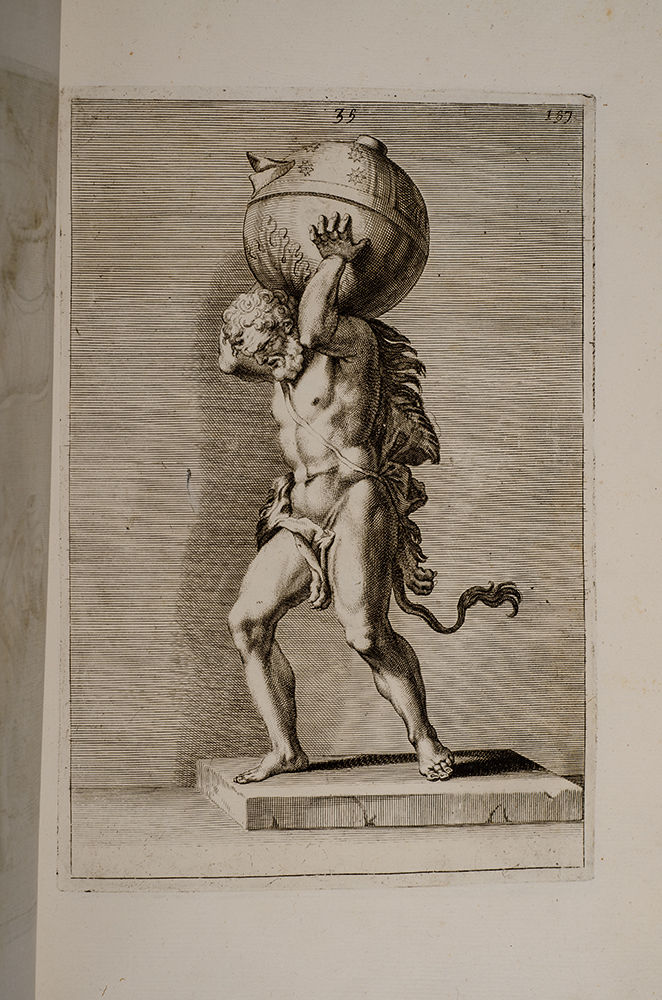
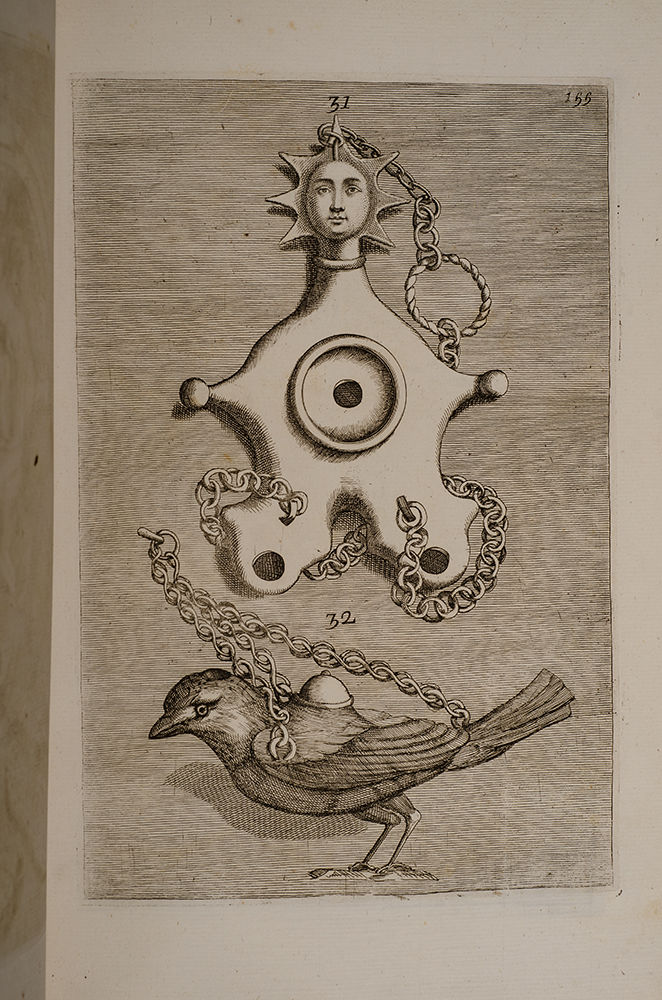
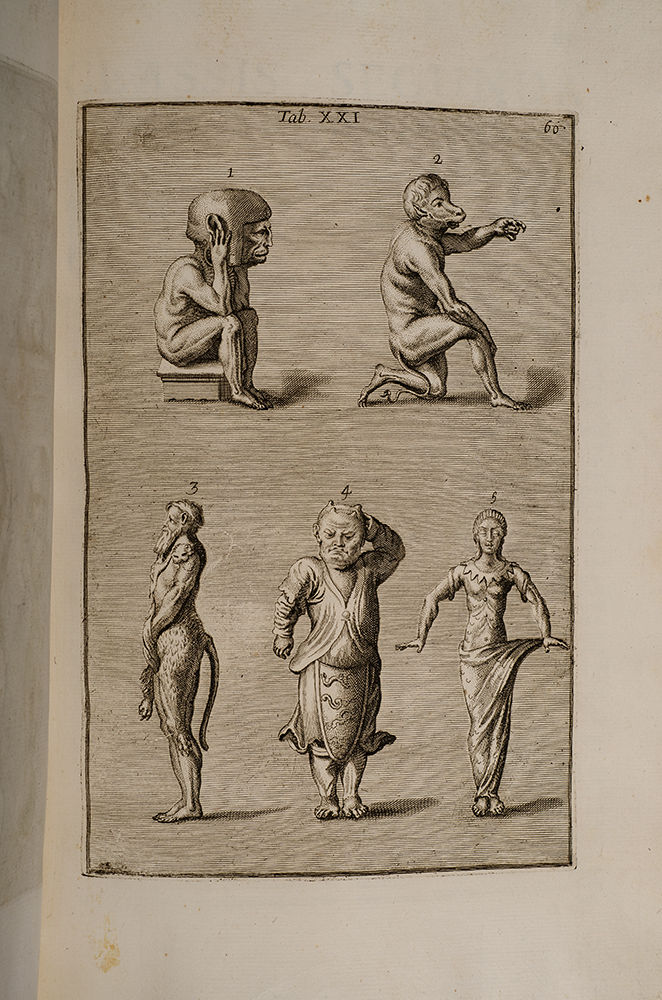
The catalogue is arranged in twelve classes, encompassing antiquities, sculpture, inscriptions, natural history, zoology, botany, minerals, scientific and mathematical instruments, ethnography, architecture, engineering, and countless objects which today defy easy classification. Bonanni's descriptions are accompanied by an astonishing series of engraved illustrations depicting the museum's treasures with remarkable precision. Here are classical marbles, Egyptian antiquities, Roman inscriptions, telescopes, microscopes, ingenious mechanical devices, shells, insects, crustaceans, fishes, birds, fossils, shoes from around the world, ritual objects, monuments, funerary urns, statues, mathematical instruments, and countless other marvels collected from every corner of the known world. The visual richness of the volume perfectly mirrors the astonishing diversity of Kircher's museum itself.
Among the museum's greatest treasures were objects that fired the imagination of generations of visitors: Egyptian mummies and hieroglyphic monuments, one of the earliest cuneiform inscriptions seen in Europe, elaborate scientific instruments, remarkable ethnographic artifacts, exotic marine specimens, and innumerable natural curiosities. Although the museum itself was eventually dispersed, Bonanni's great catalogue preserves its contents in extraordinary detail and remains indispensable for reconstructing one of the formative collections in the history of museums.
The present copy is particularly distinguished by its remarkable completeness. Most surviving examples have long presented bibliographers with difficulties, owing to the extraordinarily complex arrangement and numbering of the engraved plates. Auction records over the past half century reveal that many copies are defective, lacking plates or entire gatherings. The present copy contains 190 engraved plates, including two double-page folding engravings-an exceptional total that exceeds those recorded for virtually every other copy described in the literature. This remarkable completeness alone places the volume among the finest surviving examples.
The condition is equally impressive. The engravings remain remarkably fresh and well-printed, preserving the crisp impressions so often lost through repeated consultation. The contemporary vellum binding survives in unusually pleasing condition with only minor wear consistent with age, while the interior is exceptionally clean, the occasional light browning doing little to detract from the overall freshness of the volume. Particularly appealing is the early Bibliotheca Kircheriana label together with the ownership of Albert Vialis, one of the foremost twentieth-century collectors of Kircheriana, adding an important chapter to the book's distinguished provenance.
Today, the Musaeum Kircherianum occupies a unique position in the history of science, collecting, archaeology, and museums. It is simultaneously an encyclopaedia of seventeenth-century knowledge, a monument to the European cabinet of curiosities, and the definitive record of one of history's greatest collections. Few books better capture the intellectual optimism of the Baroque age, when every object - from a fossil shell to an Egyptian obelisk - was believed capable of revealing the hidden order of Creation.
A cornerstone of Enlightenment collecting, and one of the most visually compelling and historically important museum catalogues ever published.
Cicognara 3372. Caillet 5784. Honeyman 550. Brunet I, 1086. Nissen ZBI 2198.